A strainer is the first filter between the farm and the dairy. Here is how to choose the right material, size and sieve for your milk can or collection point.
Before milk is measured, tested or poured into a bulk can, it passes through a strainer. It is a simple tool, but a poor one lets dirt into the milk and slows every collection. This guide explains what to look for when you buy.
Why straining matters
Milk picks up hair, straw, dust and small insects between the animal and the can. Straining catches these at the first opportunity, so they do not break up into the milk or clog downstream equipment such as a cream separator. It also protects the quality of the milk you are paid for.
Stainless steel or aluminium?
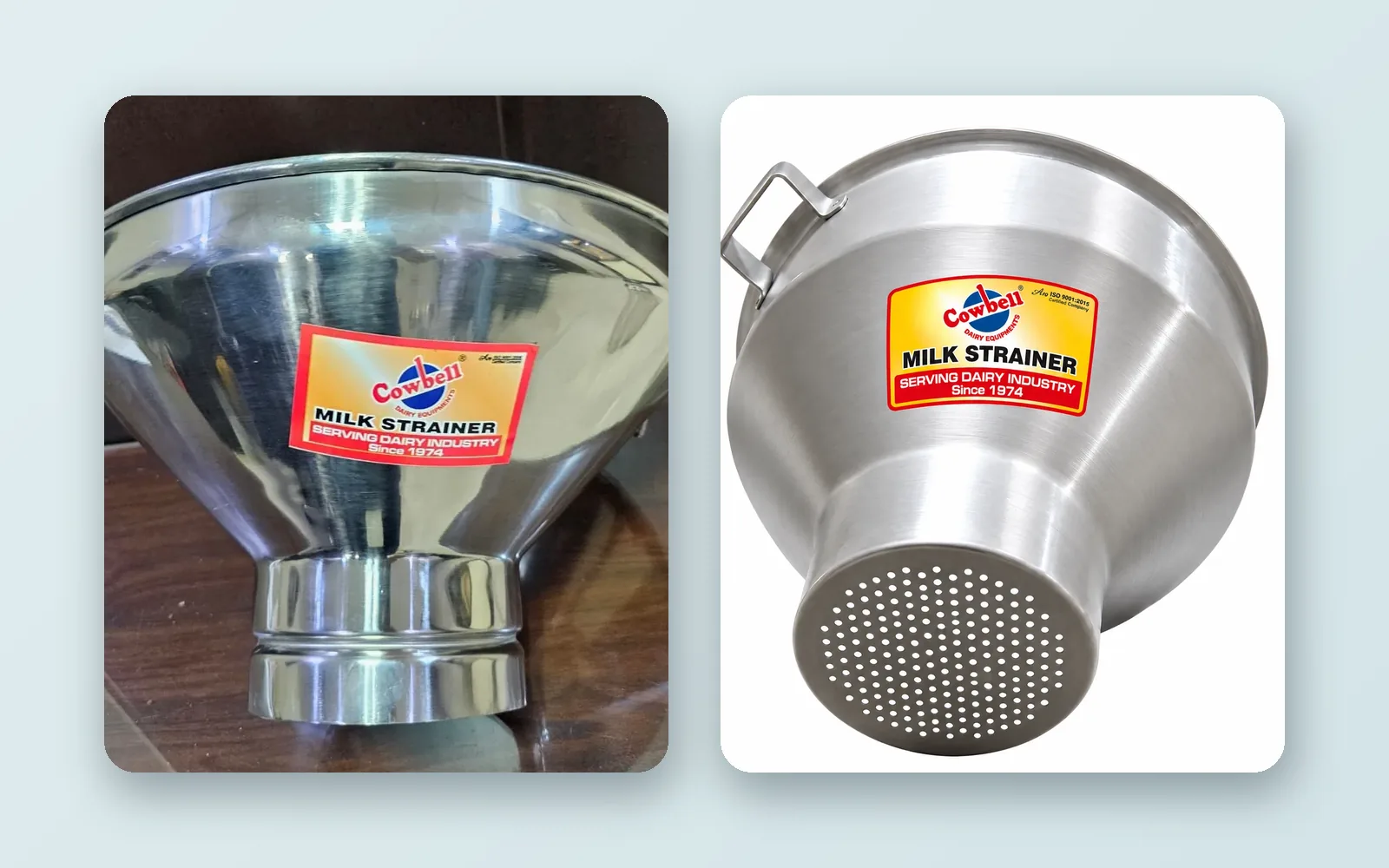
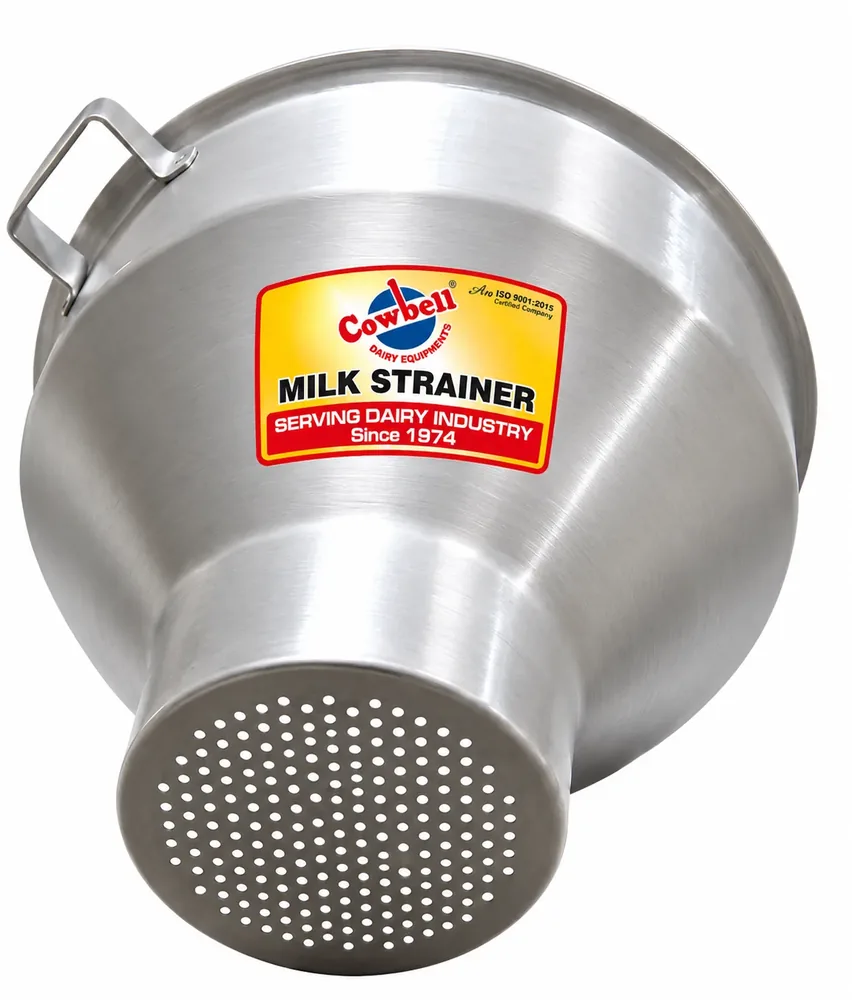
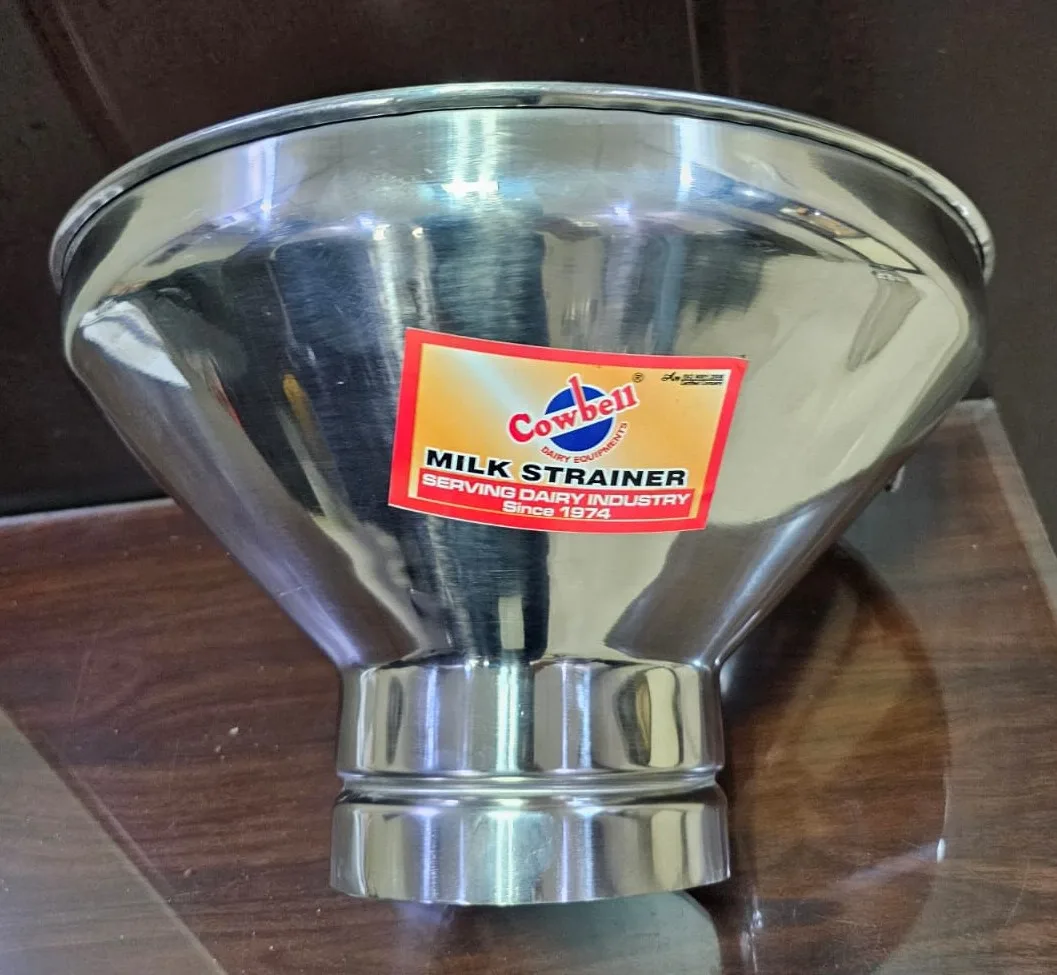
- Stainless steel has a smooth, non-porous surface that is easy to clean and does not stain or pit easily. It suits busy collection centres where the strainer is used all day. See the Cowbell stainless steel milk strainer.
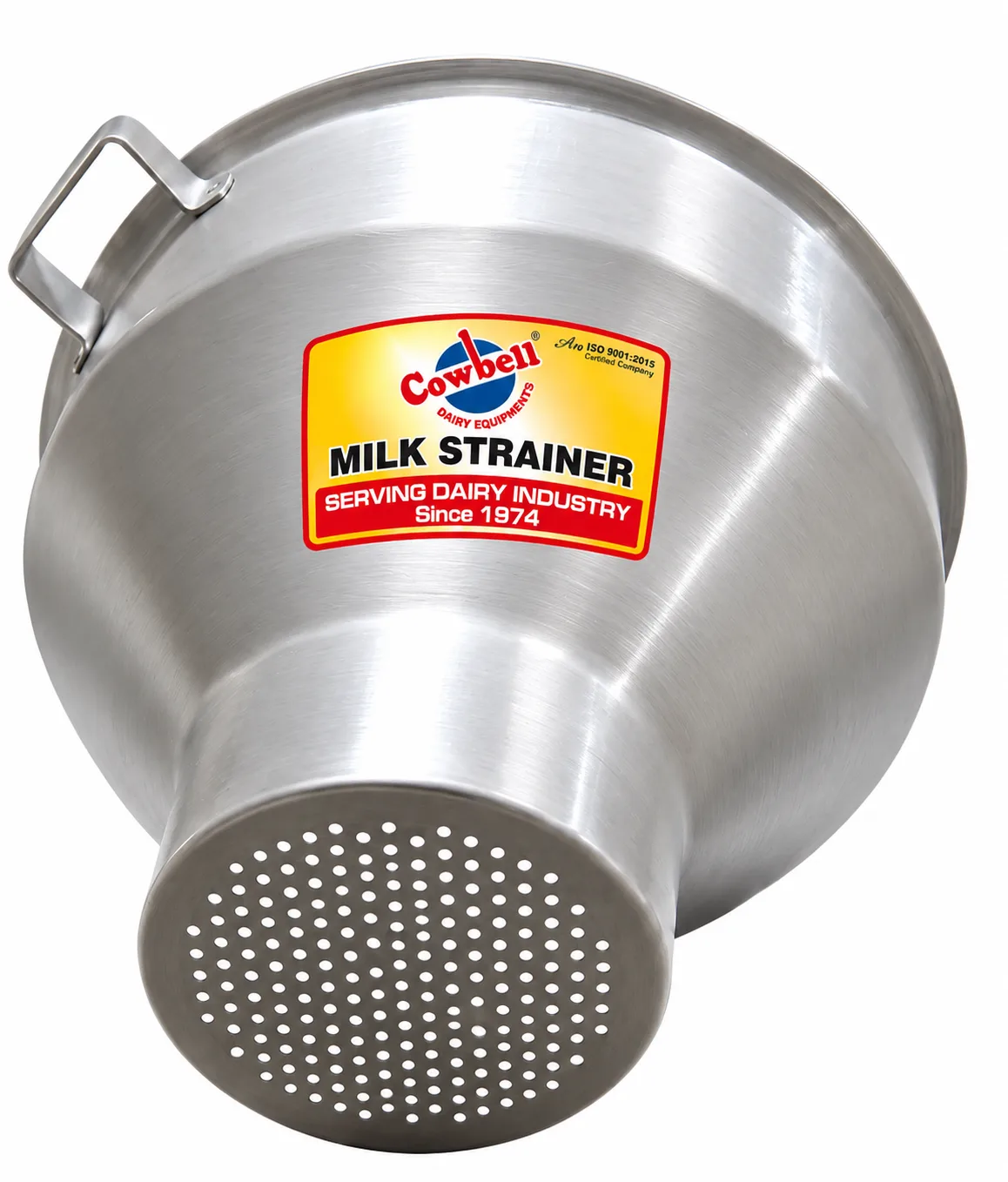
- Aluminium is lighter and more affordable, and it works well for daily farm use if it is washed with a mild detergent (harsh alkaline cleaners can darken or pit aluminium). See the Cowbell aluminium milk strainer with sieve and lock.
What to check before you buy
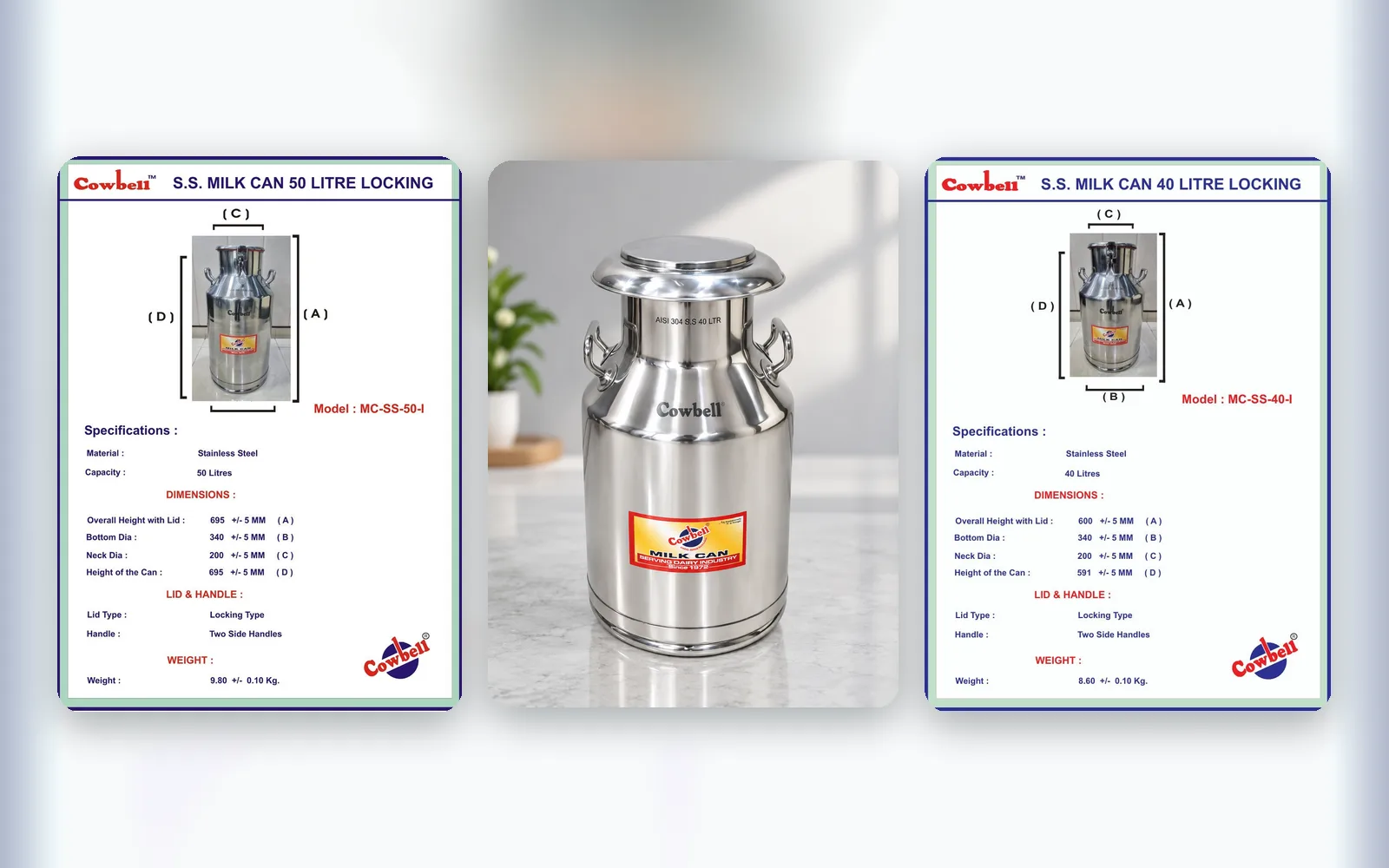
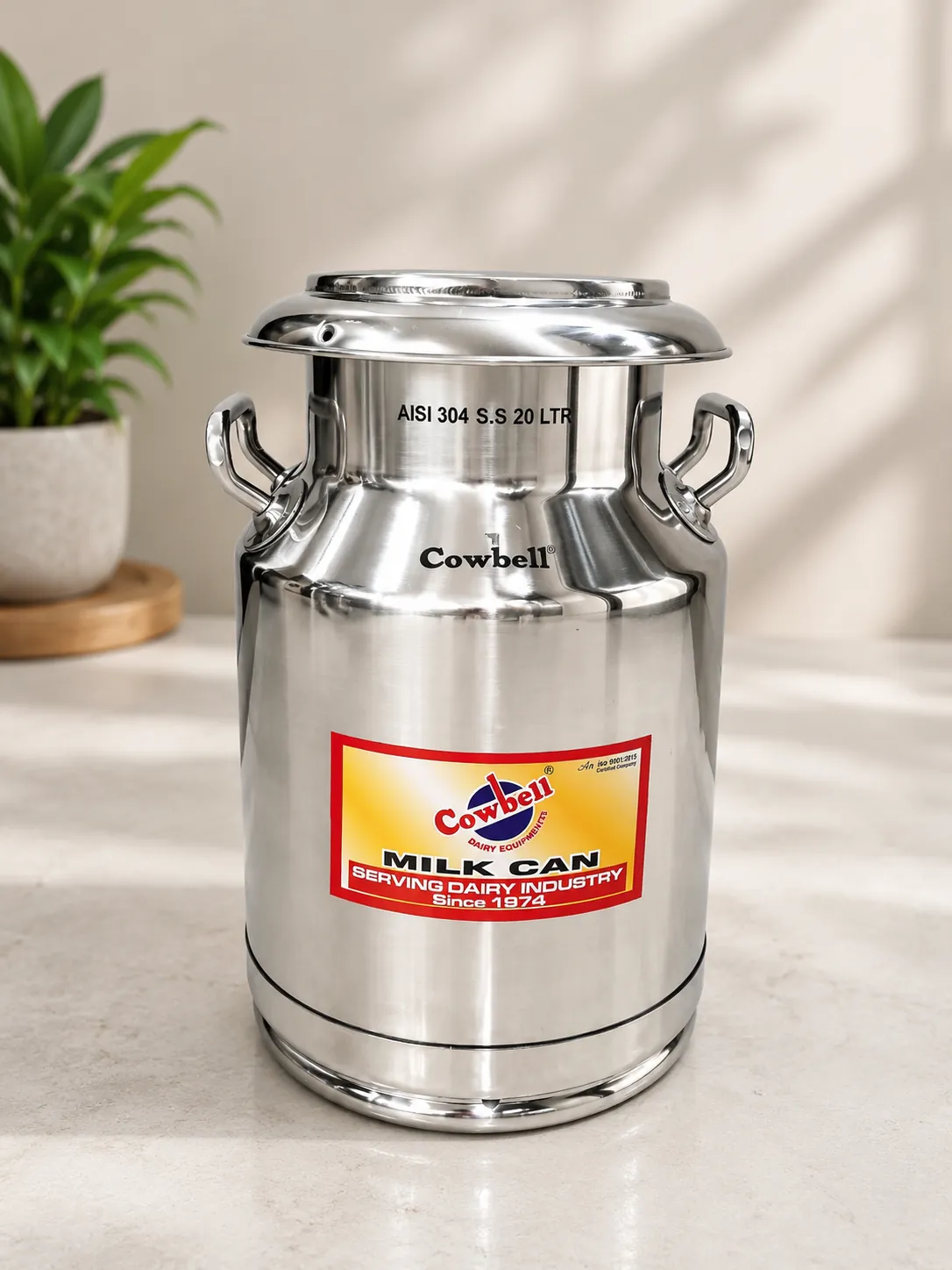
- Size of the funnel: wide enough to pour quickly, with a spout that fits the mouth of your milk can. Match it to the cans you use, such as a 20 LTR can.
- The sieve: fine holes catch more dirt but flow more slowly. Pick a sieve that is fine enough for clean milk and easy to lift out and rinse.
- A lock or clamp: a strainer that locks onto the can will not tip when you pour from a heavy pail.
- Smooth welds and edges: no sharp burrs and no cracks where milk can collect.
- Handles: firmly attached, so the strainer can be lifted and hung to dry.
Using a strainer the right way
- Rinse the strainer with clean water before use.
- Place it firmly on the mouth of the can.
- Pour slowly so the sieve is not overloaded.
- Lift out the sieve, empty the residue away from the milking area and rinse.
- Wash, rinse and hang to dry after the last pour.
One set of matched equipment
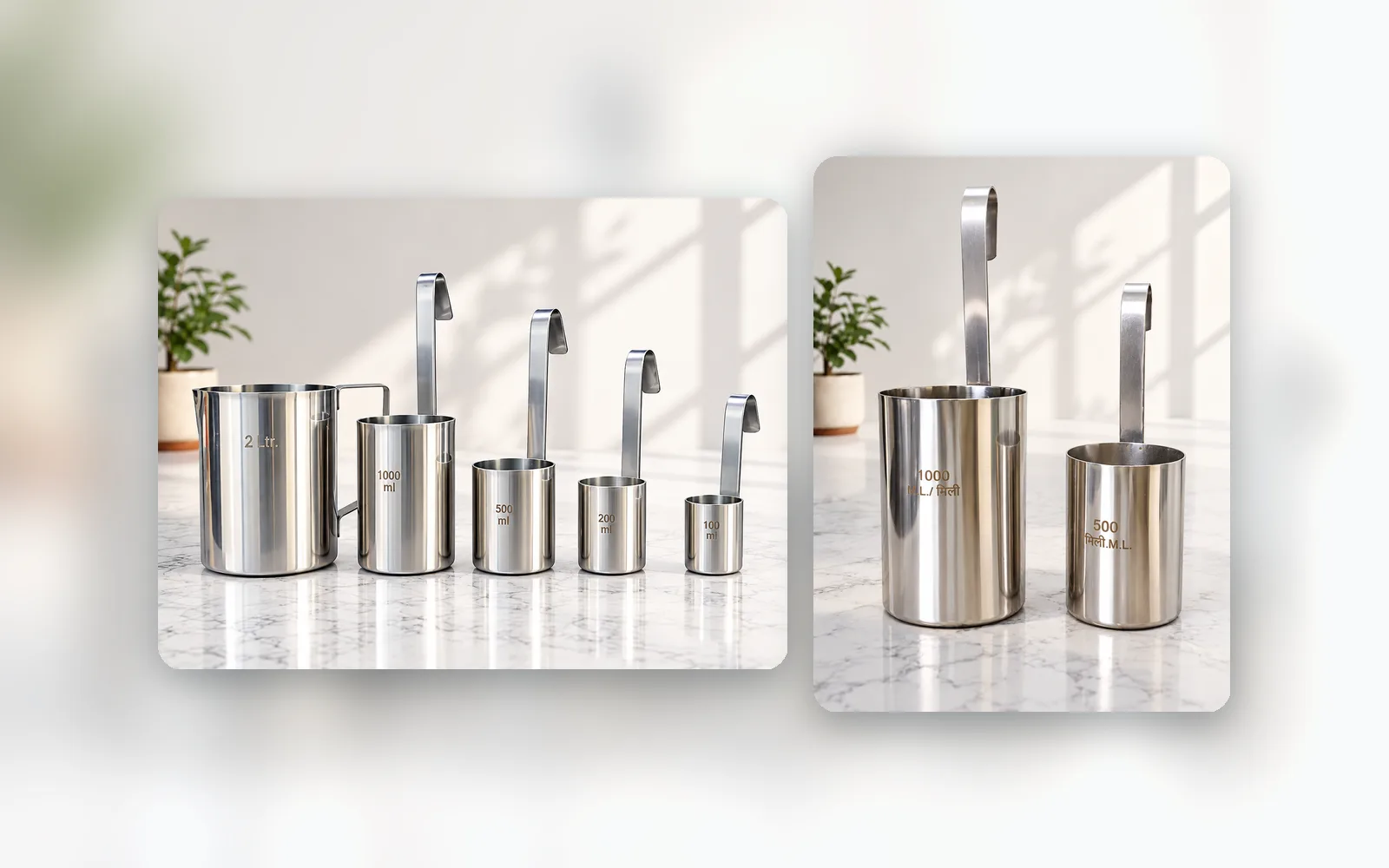
A strainer works best as part of a complete kit: cans, milk measures, a Gerber centrifuge and a separator. Our collection centre checklist lists everything in one place. Send us your list on WhatsApp and we will prepare a quote.
Frequently asked questions
Does straining make milk safe?
No. Straining removes visible dirt, hair and insects, but it does not remove bacteria. Clean equipment and quick cooling are still essential.
How often should a strainer be cleaned?
After every use. Rinse with clean water, wash with a food-safe detergent and a soft brush, rinse again and let it dry upside down in a clean, shaded place.
Related products
Need a quote or advice?
Tell us your capacity and requirements. Our team will reply with specifications and pricing.